
⚡ Key Takeaways
- Deep questions work by triggering mutual vulnerability — both people feel safe to open up gradually.
- Start with Level 1 (casual, low-stakes) before moving to Level 3 (emotional, personal).
- The Conversational Side Door technique eases the transition from small talk to depth without awkwardness.
- Avoid the Interrogation Trap: ask, then share — never fire questions without reciprocating.
- The Aron 1997 study proved deep closeness can form in under 45 minutes using structured questions.
Real human closeness is not built on exchanging resume facts. It is created through a gentle, structured progression of mutual vulnerability. According to a 2025 Cigna loneliness survey, 58% of adults feel lonely regularly — making meaningful conversation skills more important than ever. Bypassing small talk does not mean rushing to confess your deepest secrets; it means offering structured curiosity hooks that invite stories rather than statistics.
Knowing the right deep questions to ask someone can transform a surface-level exchange into a genuine connection. Staring at a blank chat box is frustrating when you cannot figure out how to move past standard pleasantries. We want to skip safe chatter and understand who is sitting behind the screen. If you are struggling with where to begin, our curated conversation starters can help you break the ice naturally before you go deeper.
Skipping small talk is not about breaking social boundaries or asking intrusive questions immediately. It is about understanding the mechanics of trust. Genuine connection requires a balance of curiosity and emotional safety. When you know how to build a comfortable bridge between casual greetings and deep sharing, conversations become effortless. You stop trading boring trivia and start sharing actual experiences — and that is when strangers become friends.
The key is to replace standard scripts with open questions that offer room to breathe. Instead of asking what someone does for a living, ask what they look forward to when their workday ends. Instead of asking where they live, ask what they love most about their favorite spot in town. These subtle shifts turn a routine interview into a shared journey of discovery.
The Science of Fast Closeness
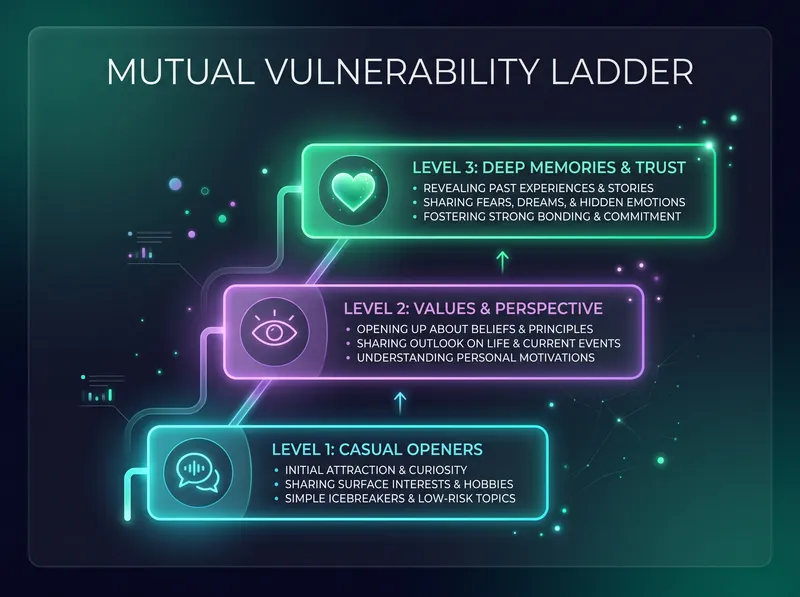
A landmark study by psychologist Dr. Arthur Aron at Stony Brook University proved that two strangers could build deep closeness in under an hour. Published in the Personality and Social Psychology Bulletin (Aron et al., 1997), the research had pairs ask 36 increasingly personal questions. Success relied not on intensity, but on structured pacing — questions gradually moved from light preferences to emotional memories, establishing a secure ladder of trust.
This process relies on mutual vulnerability. Connection is a two-way street. If one person shares a deep story while the other remains silent, the relationship feels imbalanced and triggers discomfort. Closeness develops when both take small, equal steps into vulnerability. One offers a glimpse into their world; the other mirrors that openness. The circle continues.

Thoughtful questions are only half the battle. The other half is listening. When you ask a deep question, focus entirely on their reply. If you are simply waiting for your turn to speak, the other person will sense the lack of interest and pull back. Active listening combined with reciprocal sharing drives fast intimacy.
The Conversational Side Door
The most common mistake when trying to go deep is jumping into heavy topics too quickly. Asking a stranger about their greatest regrets or parental relationships within five minutes feels jarring, triggering a defense mechanism. To avoid this, master the conversational side door: take a casual active topic and gently turn it toward a deeper perspective.
Imagine you are chatting about weekend plans. A standard response might be "that sounds fun." A side door approach asks a question tapping into values: "If you had a weekend with zero responsibilities, what would your perfect Saturday morning look like?" This light question reveals immense information about personality, pacing, and what brings peace — transitioning naturally to their ideal life.
Another side door technique uses curiosity hooks. When they share a life detail, use it as a stepping stone. If they mention a specific show, ask what drew them to that genre — transitioning from facts to internal tastes while keeping the dialogue flowing organically.
150+ Deep Questions to Ask Someone — By Level
Having a selection of thoughtful questions ready makes a massive difference in your social interactions. These are not pickup lines or rigid interview questions — they are invitation cards for storytelling. We have grouped these connection tools into three levels, allowing you to choose the perfect depth for any moment in your conversation.
Level 1: Casual Openers with Substance
These deep questions to ask someone are perfect for early conversations. They require zero emotional intensity to answer, yet they invite unique stories and opinions that small talk never reveals.
- What is a random skill or odd talent you possess that almost never comes up in conversation?
- If you could spend a month living in any era of history without worrying about safety, where would you go?
- What is the most interesting internet rabbit hole you have fallen down recently?
- If your current mood had a specific soundtrack or musical genre, what would it sound like today?
- What is a simple, everyday sight that always brings you a sense of quiet happiness?
- If you had to eat one cuisine for the rest of your life, what would it be and why?
- What is the strangest compliment you have ever received?
- What was the last thing you did that genuinely surprised yourself?
- If you could pick any fictional universe to live in for a year, which would you choose?
- What is a place you have been that felt completely unlike anywhere else?
- What is the most spontaneous decision you have ever made that turned out well?
- What is a habit you have that most people would find unusual?
- If you could instantly know the answer to one question about the universe, what would you ask?
- What childhood activity did you love that you wish adults did more of?
- What is your most unpopular opinion about something most people love?
- What is a movie or book you recommend to everyone, and why does it matter to you?
- If you could have any superpower for just one hour, how would you use it?
- What is something you have never tried but have always been curious about?
- What is a skill you are secretly proud that you have taught yourself?
- If you could redesign any room in your home from scratch, which one and how?
Level 2: Values and Perspective
Once you have established a comfortable rhythm, transition to questions that explore how they view the world and what drives their decisions. These questions reveal their internal compass.
- If you could give your younger self one piece of advice, what would it be and at what age would you deliver it?
- What is a belief you held strongly for years that you have completely changed your mind about?
- When you need to clear your mind after a stressful week, what is your favorite ritual?
- What does a truly successful life look like to you, ignoring what society tells us we should want?
- If you could master any single human quality or emotional skill overnight, what would you choose?
- What is something you think most people misunderstand about you?
- How do you treat people who can do absolutely nothing for you?
- What value do you hold that most people around you do not seem to share?
- What does loyalty mean to you in practice — not in words?
- What is the hardest decision you have made that you still believe was the right one?
- If your closest friends had to describe your greatest flaw, what would they say?
- What do you think is the most underrated quality a person can have?
- When have you been most proud of how you handled something difficult?
- What boundary took you the longest to learn how to set?
- What would you do differently if you knew no one would judge you?
- What is something you believe that most people around you disagree with?
- How do you define kindness when no one is watching?
- What is the most important lesson a failure has ever taught you?
- If you could change one thing about how you were raised, what would it be?
- What does freedom mean to you in everyday life — not just in theory?
Level 3: Deep Memories and Vulnerability
These serve as intimate questions to ask a partner or close friend to explore personal histories, dreams, and emotional truths. Use these when both of you are ready for deep connection.
- What is a memory from your childhood that shaped the person you are today, even if it seems small?
- If you could ask a crystal ball one honest truth about your future, what would you want to know?
- What is a compliment you received years ago that you still think about on hard days?
- If you had to describe your personal philosophy on life in three simple words, what would they be?
- What is something you are holding onto right now that you know you need to let go of?
- What is something you have never told anyone but would feel relieved to share?
- When have you felt most fully like yourself?
- What does your ideal version of yourself look like, and what is stopping you from becoming that person?
- What is your most treasured memory and why does it still hold so much weight?
- What is a fear you have never fully admitted to yourself until recently?
- For what in your life do you feel most grateful — something people might overlook?
- If you could go back and relive one day of your life exactly as it was, which day would you choose?
- What do you most want people to understand about you that they rarely do?
- What is the kindest thing anyone has ever done for you with no expectation of anything in return?
- What is a part of your story you have never felt ready to tell someone?
- What would your life look like if you stopped being afraid of what others think?
- What relationship in your life has changed you the most — and how?
- If you could write a letter to your future self in ten years, what would you warn them about?
- What is something you have forgiven yourself for that took a long time to reach?
- What is the one thing you would regret most if you never did it?
Deep Questions to Ask Your Best Friend
Even the closest friendships have unexplored territory. These deep questions to ask your best friend are designed to deepen bonds that have already stood the test of time — revealing layers neither of you knew existed.
- What is something about you that I still do not know?
- What do you wish I understood about your life right now?
- If you could change one thing about our friendship, what would it be?
- What moment in our friendship has meant the most to you?
- Is there something you have wanted to tell me but have never found the right moment?
- What do you think has changed the most about you since we became friends?
- What dream of yours have you never told me about?
- If you needed someone at 3am, would you call me first? Why or why not?
- What have I done that impacted you more than you have told me?
- What do you admire in me that you wish you had more of in yourself?
- In what moment did you know our friendship was real?
- What is the hardest thing happening in your life right now that you have not shared?
- How have I let you down, even if you forgave me for it?
- What part of your life are you secretly afraid is going in the wrong direction?
- If we could go on any adventure together tomorrow, what would it be?
Deep Questions to Ask Your Partner or Someone You Like
Romantic closeness is built through emotional transparency. These deep questions to ask a partner or someone you like invite the mutual vulnerability that psychologist Arthur Aron's research identified as the engine of fast romantic bonding.
- What is your most treasured memory of us — one I might not even remember?
- What does love feel like to you — not what it looks like, what it feels like?
- What do you need from a partner that you have never been fully able to ask for?
- What is something you have always wanted to do with me but have never suggested?
- Where in your life do you feel I understand you completely, and where do I still have gaps?
- What is the version of your future you are most afraid will not happen?
- If you could change one thing about how I show up for you, what would it be?
- What does intimacy mean to you beyond the physical?
- When do you feel most loved by me?
- What fear about our relationship have you never said out loud?
- What do you want our life to look like in five years that we have not talked about yet?
- What is something about your past I should understand to understand you better now?
- If you could redesign our relationship in any way, what would you keep and what would you change?
- What is the one thing I do that makes you feel safest?
- What quality in me first made you think this could be something real?
Deep Questions by Relationship Context
| Context | Best Question Level | Example Question | What It Reveals |
|---|---|---|---|
| Strangers / New connections | Level 1 | What random skill do you have that never comes up? | Personality, humor, self-awareness |
| Friends | Level 2 | What belief have you changed your mind about? | Values, intellectual honesty, growth |
| Partners / Romantic interest | Level 3 | What do you need from a partner that you have never fully asked for? | Attachment style, emotional needs, vulnerability |
| Work colleagues | Level 1–2 | What does a truly successful career look like to you? | Ambitions, values, professional identity |
| First dates | Level 1–2 | What is the most spontaneous thing you have ever done? | Risk tolerance, spontaneity, life outlook |
Deep Questions to Ask a Stranger or New Connection
Asking the right deep questions to ask someone you just met can turn an awkward first conversation into a memorable one. These questions are designed for zero emotional risk at entry but deliver surprisingly rich answers.
- What is the best piece of advice someone has given you that you actually followed?
- What is a place you have visited that changed your perspective on something?
- If you could swap lives with anyone for one day, who would it be and why?
- What is one thing about your life that would surprise most people?
- What topic could you talk about for hours without getting bored?
- What is something small you do every day that brings you quiet joy?
- If you had to describe yourself in three words, what would you pick — and are they the same words others would choose?
- What is the most interesting thing you have learned in the last six months?
- What hobby or interest have you recently gotten into that you did not expect to love?
- If you could invite any three people, living or dead, to dinner, who would they be?
- What question do you wish people asked you more often?
- What is a fear you have gradually overcome and how did you do it?
- What is something you do differently from most people you know?
- What has been the most unexpected chapter of your life so far?
- If today were your last day to be remembered for one thing, what would you want it to be?
Philosophical and Existential Deep Questions
These questions reveal how someone thinks about meaning, existence, and the big picture of life. Use them when the conversation has already reached a comfortable level of depth and both of you are curious about ideas rather than just personal history.
- If you could know the objective meaning of life, would you want to? Why or why not?
- Do you think humans are fundamentally good, or do circumstances make us who we are?
- What do you think happens after we die, and does your answer change how you live?
- If free will does not exist, does that change your sense of responsibility for your choices?
- What does it mean to live a life well-lived, in your honest opinion?
- If you had to define "home" in three sentences, what would you say?
- What do you think is the single greatest threat to human happiness right now?
- Would you rather know when you will die or never know at all? Why?
- What is something you believe deeply that you cannot fully explain with logic?
- If you could ask one question and receive an honest, complete answer from any person in history, what would you ask and to whom?
- What is the difference, to you, between being happy and being fulfilled?
- Do you think the world is getting better or worse overall — and what does your answer say about you?
- If you could live forever, would you? At what cost would you refuse?
- What role does suffering play in building character, in your view?
- Is there anything you believe so strongly that you would sacrifice social approval to defend it?
Mistakes That Dry Up Conversations
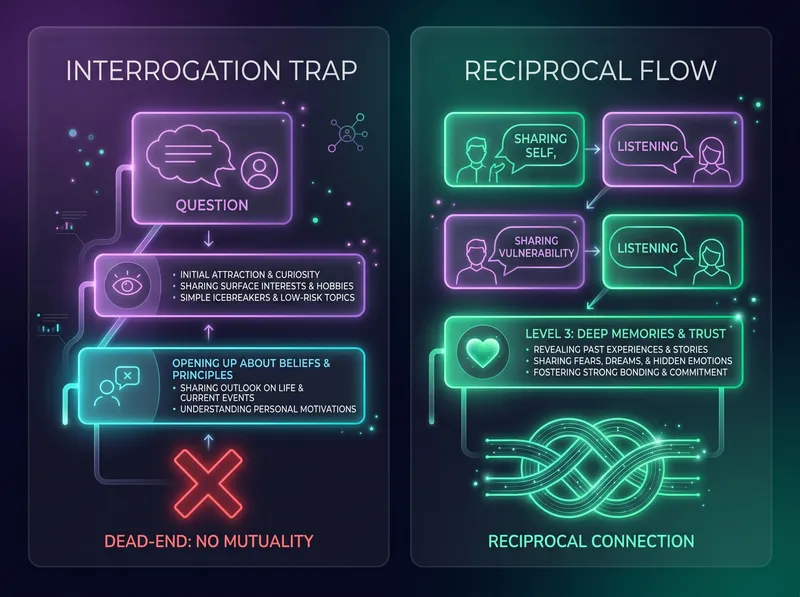
Even with the best intentions, certain habits will cause a conversation to dry up quickly. The most common error is falling into the Interrogation Trap. This happens when you ask question after question without sharing anything about yourself. The other person starts to feel cross-examined, which instantly kills the casual warmth of the exchange. Remember to balance every question with a brief, honest observation of your own. Share your own stance before or after they answer.
Another frequent mistake is ignoring digital body language. When learning how to make friends online, you must pay attention to pacing, paragraph size, and tone. If they are giving short one-word answers, it is a sign they are either busy or uncomfortable with the current depth. Rushing the intimacy will only drive them away.
| Conversational Aspect | The Interrogation Trap | Empathetic Reciprocal Flow |
|---|---|---|
| Pacing | × Rapid-fire questions with zero personal sharing | ✓ Steady alternating loops of curiosity and storytelling |
| Trust Level | × Low trust — the speaker feels cross-examined | ✓ High trust through balanced mutual vulnerability |
| Dwell Time | × Short dry answers that kill the dialogue | ✓ Elaborate descriptive stories that sustain connection |
| Emotional Safety | × One-sided exposure creates discomfort | ✓ Shared vulnerability creates psychological safety |
Avoid forced positivity. If the other person shares a frustration or difficult memory, do not put a positive spin on it immediately. Validate their feeling first: "That sounds tough" is far more bonding than offering quick solutions. Emotional awareness means sitting with their reality without trying to edit it.
Building Closeness Over Text
Modern connection happens in text boxes, which brings unique advantages. You have time to think and craft thoughtful answers. The challenge is the absence of physical cues — without vocal tone or facial expressions, messages can easily feel cold. To build deep connections in a virtual space, you must learn digital body language. Protect yourself while doing so by reading our guide on online privacy and VPN safety before sharing personal details.
Add rich sensory details to your messages. Instead of saying you are eating dinner, describe the dish and how it turned out. Instead of saying you had a busy day, mention the one funny moment that made you laugh. These small details give the other person something specific to hold onto, making it much easier for them to write back.

Pacing is critical over text. Let the exchange breathe. Keep messages to a few sentences, allowing the other person to respond. If they match your length and ask questions back, gradually increase depth. This slow dance builds a safe environment where both can be genuine. If you are ready to explore safe matchmaking, our comparison of the best free dating sites is a helpful starting point.
Where to Practice Deeper Conversations Online
Knowing the right deep questions to ask someone is only half the equation — the other half is finding the right space to practice them. Here are some well-established online platforms where meaningful conversation is possible, along with what makes each one distinct.
- Chatib (chat-ib.com) — Anonymous, registration-free chat rooms where you can use these questions with strangers worldwide. The open format makes it easy to practice without social pressure.
- Reddit communities — r/socialskills, r/CasualConversation, and r/GetToKnowEachOther are active communities where people explicitly seek deeper, more meaningful exchanges.
- Bumble BFF mode — Designed for platonic friendship building; the prompt-based profile format naturally invites deeper self-disclosure.
- Discord interest servers — Topic-based servers (philosophy, creative writing, mental health support) attract people already open to depth. Finding servers aligned with your interests connects you with people who share your conversational style.
- Slowly (pen-pal app) — Messages take time proportional to real-world distance to arrive, which encourages longer, more thoughtful messages — ideal for Level 2 and 3 questions.
- Meetup.com — For in-person practice, Meetup groups focused on personal development, philosophy, or book clubs are natural environments for deeper conversation.
Whichever platform you choose, always review best practices for online privacy and digital safety before sharing personal information. And if you are looking to deepen a long-distance friendship, our guide on long-distance friendship communication pairs well with these question techniques.
Frequently Asked Questions
The Real Takeaway
Human connection is the answer to the loneliness epidemic reshaping modern life. We spend hours scrolling through sterile screens, exchanging quick messages that barely touch the surface. Yet a rewarding connection is within reach — it only requires the courage to ask a better question and the presence to truly listen. By stepping away from predictable small talk and offering authentic curiosity, you create a warm space where connection flourishes.
Start small. Try one Level 1 question in your next conversation. Offer a short story of your own, listen to their reply, and watch how a simple exchange turns into something real. The best conversations are not polished or over-optimized — they are simply two people sharing their honest worlds, one question at a time.
Sources & References
- Aron, A., Melinat, E., Aron, E. N., Vallone, R. D., & Bator, R. J. (1997). The experimental generation of interpersonal closeness: A procedure and some preliminary findings. Personality and Social Psychology Bulletin, 23(4), 363–377. doi.org/10.1177/0146167297234003
- Cigna. (2025). Loneliness and the Workplace Report. Cigna Group. Referenced for the 58% adult loneliness statistic.
Ready for Deeper Conversations?
Break free from superficial small talk. Connect instantly with interesting people worldwide in a safe, warm, anonymous space built for real human sharing.
Launch Free Chat LobbyRelated Articles
- Conversation Starters: 100+ Ideas to Break the Ice in Any Situation
- How to Make Friends Online: A Practical Guide for Genuine Connection
- Long-Distance Friendship Communication: Keeping Bonds Strong Across Miles
- Flirting Tips for Romance Online: How to Connect Meaningfully
- Online Privacy and VPN Safety: What You Need to Know Before Chatting